Categories
Finance Government

How to Open MP2 Savings in Pag-IBIG

Updated: January 2026

Are you looking to start building your savings? If so, have you heard about the Modified Pag-IBIG 2 (MP2) savings program of Pag-IBIG?

What Is Pag-IBIG MP2 Savings?

Members of the PAG-IBIG Fund have the option to voluntarily enroll in the MP2 PAGIBIG savings program. It’s available to all members who are registered with the PAG-IBIG Fund, and signing up for the MP2 program is required to participate.

Once you’re enrolled, you can invest any amount you choose, starting at a minimum of P500 per month. Over time, the PAG-IBIG Fund’s investment returns and your contributions will add up. You can earn higher interest than with a regular savings account, and your savings are government-guaranteed.

Here are the dividend rates for MP2 savings:

YearDividend Rate
20247.10%
20237.05%
20227.03%
20216.00%
20206.12%
20197.23%
20187.41%
20178.11%
20167.43%
20155.34%

Requirements to Open an MP2 Savings Account

Before you begin, make sure you have the following:

1. Active Pag-IBIG Membership

You must have contributions (at least once) to qualify.

2. Pag-IBIG MID Number

You can retrieve or verify your MID number online if forgotten.

3. Valid ID

Any government-issued ID is accepted. For OFWs, passport copies may be required.

4. Active Email Address & Mobile Number

Used for online account approval and notifications.

How to Open MP2 Savings in Pag-IBIG

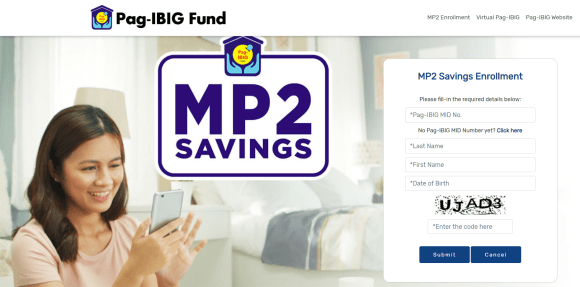
  1. Go to the Pag-IBIG fund website and select Apply for MP2

2. Complete the MP2 Savings Enrollment:

  • Pag-IBIG MID No.
  • Last Name
  • First Name
  • Middle Name
  • Date of Birth

3. Enter the captcha and select submit.

4. You will need to input your desired monthly contribution amount into the corresponding field.

5. Select your preferred dividend payout frequency, mode of payment, and source of funds from the respective dropdown menus

6. Click on submit to complete the enrollment process.

7. You will receive a completed Modified Pag-IBIG II Enrollment Form that has your 12-digit MP2 account number.

8. Don’t forget to save it for future reference in your payments.

You can withdraw your savings after at least five years of continuous participation, but keep in mind that early withdrawals are subject to penalties. So, it’s best to withdraw only when necessary.

Opening an MP2 Savings Account is one of the smartest financial moves you can make today, especially if you want a secure, high-earning savings option backed by the government. Whether you open it online or in a Pag-IBIG branch, the process is simple and beginner-friendly.

For more Pag-IBIG guides, step-by-step tutorials, and updated financial tips, read more of our articles lifeguide.ph.

Categories
Finance Government

Your 2026 Guide to Pag-IBIG Contributions for Self-Employed Filipinos

Pag-IBIG Contribution for Self-Employed 2026: Complete Guide

Managing your Pag-IBIG contribution as a self-employed Filipino doesn’t have to be complicated. Whether you’re a freelancer, small business owner, online seller, or professional, keeping your Pag-IBIG payments updated is essential to enjoy benefits like savings programs, housing loans, and short-term loans.

In 2026, the Pag-IBIG contribution for self-employed members remains the same, giving you a stable and predictable amount to budget every month. This guide explains the updated contribution rates, requirements, and the easiest ways to pay your Pag-IBIG contribution this 2026.

Pag-IBIG Contribution Rate for Self-Employed Members in 2026

Even in 2026, Pag-IBIG has not implemented any changes to the contribution schedule. This means the rates remain similar to previous years.

Monthly Contribution Breakdown

Self-employed Pag-IBIG members can choose their monthly contribution based on their income capacity.

Monthly IncomeMinimum Contribution
Below ₱1,500₱100 per month
₱1,500 and above₱200 per month

But here’s the advantage:
You can voluntarily increase your contribution (₱300, ₱500, ₱1,000, etc.) to boost your Pag-IBIG Regular Savings and future loan amounts.

Who Should Pay as Self-Employed?

You need to pay as a self-employed member if you are:

  • Freelancer or independent contractor
  • Online seller or small business owner
  • Professional (doctor, engineer, lawyer, architect, etc.)
  • Sole proprietor
  • Grab, Lalamove, Foodpanda, or delivery rider
  • Consultant, coach, or digital creator
  • OFW running your own business
  • Anyone earning income not processed through an employer

If none of your earnings are reported through payroll, Pag-IBIG requires you to remit your contributions voluntarily.

How to Register as a Self-Employed Pag-IBIG Member

Step-by-Step Registration

  1. Go to the Pag-IBIG Online Registration page.
  2. Fill out your personal and employment/self-employment details.
  3. Receive your Pag-IBIG MID Number via SMS or email.
  4. Download and print your Member’s Data Form (MDF).
  5. Start paying your monthly contribution.

Requirements for Self-Employed Members

Prepare the following:

  • Any valid ID
  • Proof of income (business permit, DTI certificate, ITR, or income affidavit)
  • Contact number and email address

How to Pay Your Pag-IBIG Contribution Anywhere in 2026

Self-employed members have multiple convenient payment options.

Pay via eWallets

You can pay instantly using:

  • GCash
  • Maya
  • ShopeePay

Just go to BillsGovernmentPag-IBIG and enter your MID Number.

Pay via Online Banking

Most major banks allow Pag-IBIG payments through:

  • BPI
  • BDO
  • Metrobank
  • UnionBank
  • Security Bank

Pay via Pag-IBIG Virtual Branch

  • Visit Virtual Pag-IBIG
  • Select Members Contribution
  • Pay using debit card or credit card

Over-the-Counter Payment

You may also pay at:

  • Bayad Center
  • SM Business Center
  • Robinsons
  • 7-Eleven CLIQQ
  • MLhuillier and Western Union

Why Self-Employed Filipinos Should Stay Updated With Pag-IBIG Payments

Paying monthly contributions gives access to:

1. Housing Loan

Up to ₱6 million for buying or building a home.

2. Multi-Purpose Loan (MPL)

Borrow up to 80 percent of your total savings.

3. Calamity Loan

Available during disasters and emergencies.

4. Regular Savings + Dividends

Your monthly contributions earn annual dividends—great for long-term savings.

5. MP2 Savings

Optional program earning up to 7 percent annually, perfect for freelancers and small business owners who want higher returns.

Tips for Self-Employed Pag-IBIG Members in 2026

  • Set a monthly reminder to avoid missed payments.
  • Increase your contribution if you’re planning to apply for a home loan.
  • Keep a screenshot of all transactions for easier verification.
  • Consider opening an MP2 account for higher savings growth.
  • Pay quarterly or annually if you don’t want to monitor monthly schedules.

Being self-employed gives you freedom, but it also means taking charge of your financial responsibilities. Staying updated with your Pag-IBIG contribution in 2026 ensures you have access to essential benefits like housing loans, savings programs, and financial assistance.

If you want more guides on Pag-IBIG, PhilHealth, and government updates, check out the latest articles on lifeguide.ph.

Categories
Finance Government

Latest Pag-IBIG Contribution 2026

Good news for Filipino workers: the latest Pag-IBIG contribution 2026 remains the same as the previous years. Despite earlier discussions about possible adjustments, Pag-IBIG has confirmed no increase in mandatory contributions for 2026. Whether you’re employed, self-employed, or an OFW, your monthly rates stay affordable while still giving you access to savings, housing loans, and long-term benefits.

This guide breaks down the unchanged contribution rates and explains what this means for your financial planning this year.

Latest Pag-IBIG Contribution 2026

Source: Pag-ibig Fund

What Are the Updated Pag-IBIG Contribution Rates for 2026?

As of 2026, Pag-IBIG has not announced changes in mandatory contribution rates to strengthen the fund and support more housing, calamity, and savings benefits for Filipino members.

Contribution Rates for Self-Employed, OFWs, and Voluntary Members

Self-Employed Members

Self-employed Filipinos may choose their contribution based on income:

  • Minimum monthly contribution: ₱200
  • You may contribute more to grow your Pag-IBIG savings.

OFWs (Land-Based & Sea-Based)

For 2026, OFW contributions also remain unchanged:

  • Minimum contribution: ₱100–₱200
  • You may increase your voluntary savings anytime.

Voluntary Members

Non-working spouses, freelancers, students, and informal workers may contribute:

  • Minimum: ₱200 per month

Why the New Pag-IBIG Contribution Matters

The increased contribution helps strengthen Pag-IBIG’s funds, allowing:

  • More affordable housing loan programs
  • Higher potential dividends for MP2 and regular savings
  • Better financial stability for calamity loans
  • Faster processing and digital upgrades
  • Bigger long-term retirement savings

Frequently Asked Questions on Pag-IBIG Contribution 2026

Will the Pag-IBIG contribution increase again after 2026?

As of now, Pag-IBIG has not announced another adjustment beyond 2026.

Does higher monthly contribution mean higher benefits?

Yes. Higher contributions may lead to bigger savings dividends, stronger housing loan eligibility, and improved retirement benefits.

What’s the difference between Pag-IBIG Regular Savings and MP2?

MP2 is voluntary, offers higher dividends, and is a popular choice among OFWs and working Pinoys looking for guaranteed savings.

The latest Pag-IBIG contribution 2026 is designed to give Filipino members stronger, more stable benefits which is perfect for anyone prioritizing long-term financial security. Whether you’re employed, self-employed, or working abroad, staying updated with these changes helps you make smarter financial decisions.

For more updated financial guides and government contribution tips, visit lifeguide.ph for tips and life hacks.

Categories
Adulting Finance Government

Your Ultimate Guide to PhilHealth Contribution Rates from 2019 to 2026

Updated: January 2026

PhilHealth Contribution Rates from 2021 to 2026: Your Complete Guide

If you’ve ever felt confused about PhilHealth contributions, you’re not alone. Every few years, the monthly rates change, and many Filipinos struggle to keep track.

This guide breaks down the PhilHealth contribution rates from 2021 to 2026, making it easier for employees, employers, OFWs, and self-employed individuals to understand their payments and plan their budgets. Whether you’re reviewing your payroll deductions or checking how much you need to remit this year, this article simplifies everything in a clear, friendly, Filipino-lifestyle way.

Why PhilHealth Contribution Rates Increased Over the Years

PhilHealth’s contribution adjustments started in 2019 as part of the Universal Health Care Act. The goal was to give every Filipino better access to healthcare services. The increase funds hospital coverage, expanded case rates, Konsulta Packages, and financial risk protection. While contribution hikes sometimes feel heavy on the budget, they support long-term health services we all rely on.

PhilHealth Contribution Table from 2021 to 2026

Source: Philhealth

How to Compute Your PhilHealth Contribution

PhilHealth contributions follow a simple formula:

Formula

Monthly Salary × Premium Rate

If your salary goes beyond the income ceiling, the maximum amount applies.

Example Computation

  • Salary: P25,000
  • Rate (2026): 5%
  • 25,000 × 0.05 = P1,250 total contribution
  • Employee pays P625
  • Employer pays P625

PhilHealth Contribution for OFWs and Self-Employed Members

  • Self-employed: Contributions are based on declared income, using the same table above.
  • Overseas Filipino Workers: The premium follows the annual rate but may be paid annually or semi-annually.
  • Senior Citizens: Automatically covered; no need to pay.
  • Lifetime Members: No more contributions once qualified.

Why These Rates Matter for Filipinos

Knowing your PhilHealth deduction helps you:

  • Track correct employer contributions
  • Plan your monthly and annual budget
  • Understand your healthcare coverage
  • Avoid underpayment issues

With healthcare costs rising, maximizing your PhilHealth benefits is important for long-term financial security.

PhilHealth contributions can be confusing, but keeping track yearly ensures you’re protected and well-informed. As the Universal Health Care law continues to roll out, expect more improvements in public health services. For more updated financial guides and lifestyle tips, don’t forget to visit lifeguide.ph.

Categories
Business Finance

Complete List of Bank Codes and SWIFT Codes Philippines in 2026

Complete List of Bank Codes and SWIFT Codes Philippines in 2026

If you’re sending money online in the Philippines, you’ll often need two things: bank codes and SWIFT codes. Whether you’re transferring through GCash, Maya, online banking, or receiving international remittances, these codes make sure your money reaches the right account.

This 2026 guide lists the complete and updated codes of major Philippine banks, helping Filipinos avoid delays, failed transfers, or long verification steps.

Complete List of Bank Codes and SWIFT Codes Philippines in 2026

What Are Bank Codes and SWIFT Codes?

Bank Codes

Bank codes in the Philippines are usually 9-digit numeric codes used for ACH transactions like GCash Cash-In, Maya transfers, PayPal withdrawals, or online bill payments.

SWIFT Codes

SWIFT codes, also known as BIC codes, are used for international remittances or sending/receiving money from abroad. These codes help identify the exact bank branch receiving the funds.

Complete List of Bank Codes in the Philippines

BANK BANK CODE
Asia United Bank Corporation (AUB)011020011
Australia and New Zealand Banking Group Limited010700015
Bank of America, N.A.010120019
Bank of China011140014
Bank of Commerce010440016
Bank of the Philippine Islands (BPI)010040018
BDO Unibank, Inc. (BDO)010530667
China Banking Corporation (China Bank)010100013
China Bank Savings, Inc.011129996
Citibank, N.A.010070017
CIMB Bank018010011
Deutsche Bank AG010650013
Development Bank of the Philippines (DBP)010590018
EastWest Bank010620014
Equicom Savings Bank, Inc.010960017
Globe Xchange, Inc. (GCash)018040010
First Consolidated Bank020780012
HSBC Philippines010060014
ING Bank N.V.010660029
JPMorgan Chase Bank, N.A.010720011
Land Bank of the Philippines010350025
Maybank Philippines, Inc.010220016
Metropolitan Bank and Trust Co. (Metrobank)010269996
Philippine Bank of Communications (PBCOM)010110016
Philippine National Bank (PNB)010080010
Philippine Savings Bank (PSBank)010470992
Philippine Veterans Bank010330016
Philippine Trust Company010090039
Rizal Commercial Banking Corporation (RCBC)010280014
Robinsons Bank Corporation011070016
Security Bank Corporation010140015
Standard Chartered Bank010050011
Sterling Bank of Asia Inc.011190019
Tonik Digital Bank011570011
Union Bank of the Philippines010419995
United Overseas Bank Philippines010270341

Complete List of SWIFT Codes in the Philippines

BANK NAMESWIFT CODE
Asia United Bank Corporation (AUB)AUBKPHMM
Australia and New Zealand Banking Group LimitedANZBPHMX
Bank of America, N.A. ManilaBOFAPH2X
Bank of CommercePABIPHMM
Bank of the Philippine Islands (BPI)BOPIPHMM
BDO Unibank, Inc. (BDO)BNORPHMM
BPI DirectBPDIPHM1
BPI Family Savings BankBPFSPHM1
BPI Globe Banko Inc.BPGOPHM1
China Banking Corporation (China Bank)CHBKPHMM
China Bank Savings, Inc.CHSVPHM1
CIMB Bank Philippines, Inc.CIPHPHMM
Citibank, N.A. – Makati BranchCITIPHMX
Citibank, N.A. – Manila BranchCITIPHMXTSU
Citibank, N.A. – Cebu BranchCITIPHMXCBU
Deutsche Bank AGDEUTPHMM
Development Bank of the Philippines (DBP)DBPHPHMM
EastWest BankEWBCPHMM
Globe Telecom, Inc. (GCash)GLTEPHMT
HSBC Savings Bank (Philippines) Inc.HBPHPHMM
ING Bank N.V.INGBPHMM
JPMorgan Chase Bank, N.A., Manila BranchCHASPHMM
Land Bank of the PhilippinesTLBPPHMM
Maybank Philippines, Inc.MBBEPHMM
Metropolitan Bank and Trust Co. (Metrobank)MBTCPHMM
Philippine Bank of Communications (PBCOM)CPHIPHMM
Philippine Business BankPPBUPHMM
Philippine National Bank (PNB)PNBMPHMM
Philippine Savings Bank (PSBank)PHSBPHMM
Philippine Veterans BankPHVBPHMM
Philtrust Bank (Philippine Trust Company)PHTBPHMM
Rizal Commercial Banking Corporation (RCBC)RCBCPHMM
Robinsons Bank CorporationROBPPHMQ
Security Bank CorporationSETCPHMM
Sterling Bank of Asia Inc.STLAPH22
Tonik Digital Bank, Inc.TODGPHM2
Union Bank of the PhilippinesUBPHPHMM

Tips for Smooth Bank Transfers in 2026

  • Double-check the bank code or SWIFT code to avoid delays.
  • For PayPal withdrawals, always match your name exactly as written on your bank account.
  • If transferring from abroad, ask if the sending bank requires an IBAN (Philippine banks do NOT use IBAN).
  • Monitor your bank’s maintenance schedules to prevent failed transactions.

Banking doesn’t have to be complicated. With this complete list of bank codes and SWIFT codes in the Philippines for 2026, you’ll have everything you need for local and international transfers. Save this guide, share it with family abroad, and check out more finance tips on lifeguide.ph.